Post-MI Cardiac Regeneration

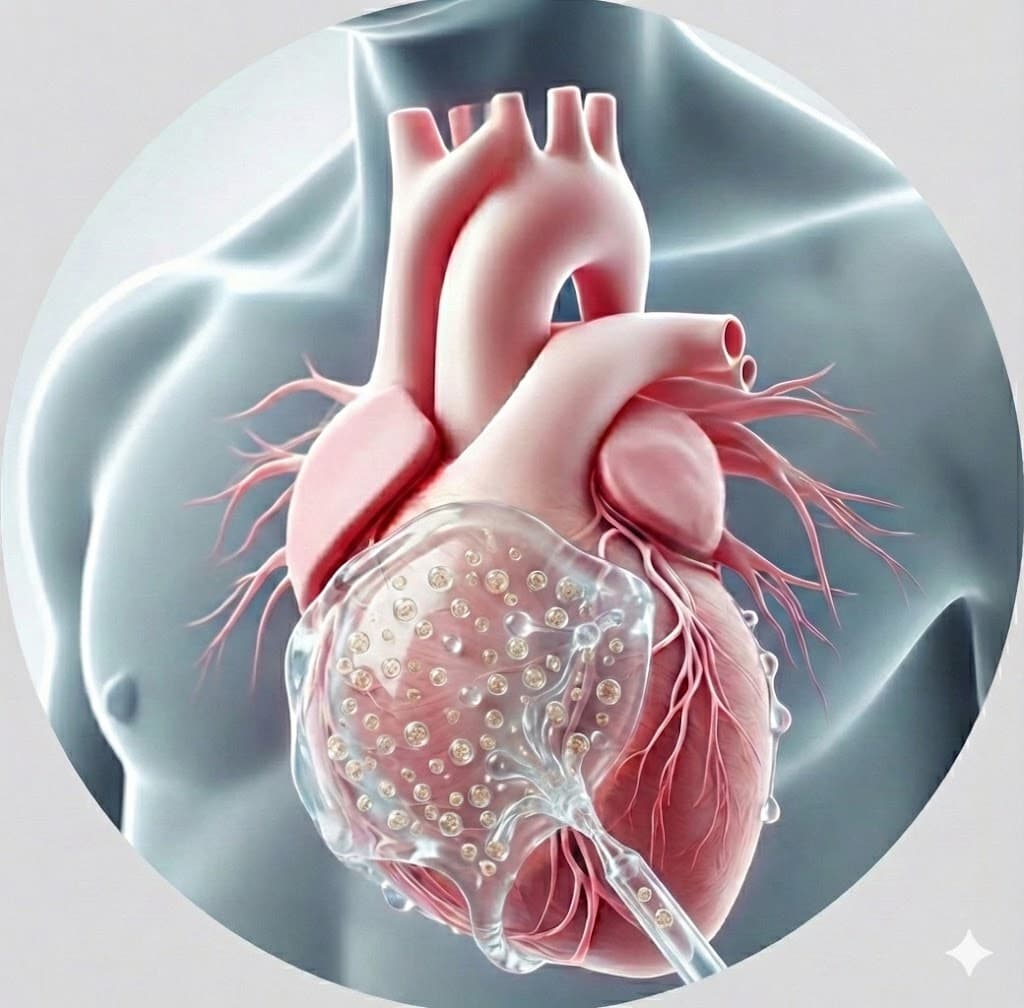
A minimally invasive injectable hydrogel for post-MI cardiac regeneration.

CardioHeal is designed as an injectable hydrogel for minimally invasive delivery of ADSC-derived exosomes to promote cardiac regeneration following myocardial infarction.

ADSC

Exosome payload

ROS

Oxidative stress control

LVEF

Functional endpoint

Clinical Problem

Myocardial infarction leaves oxygen-starved tissue, oxidative stress, cardiomyocyte death, inflammation, and fibrosis. Conventional approaches can restore blood flow, but the damaged infarct zone still needs localized regenerative support.

Mechanism

The hydrogel acts as a minimally invasive depot for ADSC-derived exosomes and supportive biomaterial cues. It localizes healing signals near the infarct zone instead of relying on diffuse systemic delivery.

Material Platform

The platform draws from thermo-responsive and oxygen-releasing antioxidant biomaterials, elastomeric cardiac patch research, and hydrogel systems engineered for tissue-compatible mechanical support.

Proof & Translation

The CardioHeal pamphlet highlights preclinical rat ischemia-reperfusion studies demonstrating enhanced cardiac regeneration, reduced scar formation, and significant improvement in left ventricular ejection fraction.
Hemostat Regenmedica Source

CardioHeal Pamphlet: Injectable Hydrogel for Post-MI Repair

The CardioHeal pamphlet frames the product around four clear properties: injectable delivery, ROS attenuation, mechanical support, and regenerative activity through ADSC-derived exosomes.

Post-MI cardiac repair

Post-MI cardiac repair

CardioHeal targets damaged heart tissue after myocardial infarction with localized regenerative hydrogel delivery.

How It Works

Simulation Linked

01

Inject

A minimally invasive hydrogel is positioned near the damaged cardiac tissue.

02

Localize

The gel forms a supportive depot that keeps regenerative signals concentrated at the injury site.

03

Regenerate

Exosomes, oxygen support, and antioxidant cues help reduce fibrosis while encouraging angiogenesis and repair.

Why It Matters

  • Injectable hydrogel format for minimally invasive delivery
  • Attenuates ROS in the post-MI injury environment
  • Mechanical support for weakened post-MI tissue
  • Regenerative ADSC-derived exosome delivery

Translation Status

Current Status: Porcine preclinical studies